 teddywrites
Serial · Part 2 · Ongoing
All the Time Between Us
Someone remembers a small printing shop, a blue folder, and a morning they saw differently.
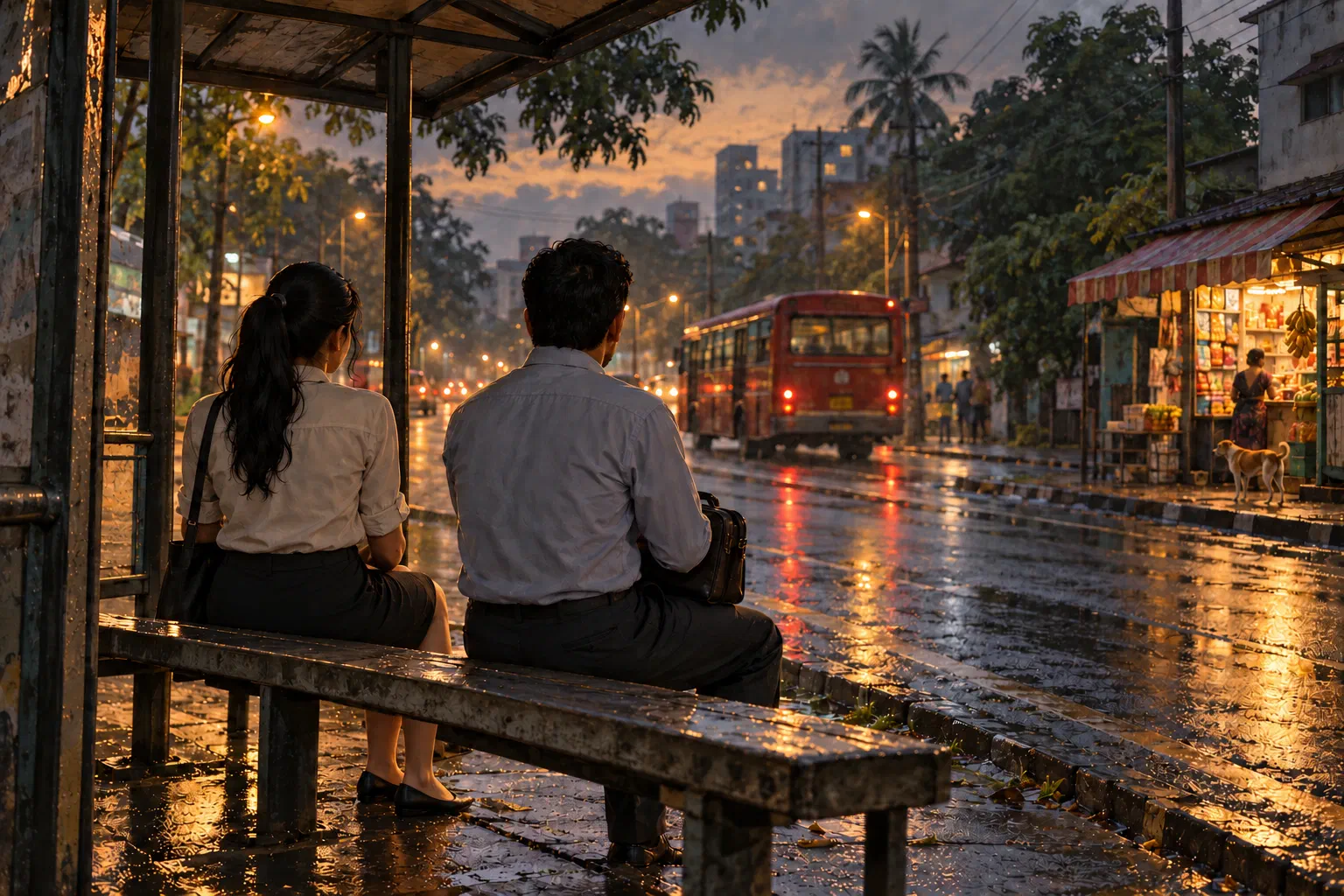
“Where?”
“At the building where you work.”
I looked at her again, trying to place her behind a desk or in the lift. There were thirty floors. I barely knew everyone on mine.
“Do you work there?”
“I used to work downstairs. At the printing shop.”
“The one next to the pharmacy?”
She nodded.
It had closed some time the previous year. There was a phone repair shop there now, with a bright sign that lit half the pavement.
“I used to go in there.”
“I know.”
“Sorry. You’ve probably said hello to me a dozen times.”
“No.”
“Not even once?”
“You were usually in a hurry.”
I thought of all the mornings I’d arrived with documents on my phone and five minutes to spare. I would stand at the counter checking the time while someone opened the attachment, adjusted the margins, found more paper.
“That sounds like me.”
She tucked a loose strand of hair behind her ear.
I was relieved to have an explanation. Then I felt uncomfortable about how relieved I was.
“So that’s how you know my name.”
“Yes, It was on things you brought in.”
“Right.”
She let me sit with that for a moment.
“You don’t have to remember me, It’s okay.”
“I’m trying to.”
“I can see.”
There was a faint smile on her face. I looked away before she could catch me studying her again.
A woman with two shopping bags stopped beside the shelter. I moved my bag to make room, but she stayed near the pavement, watching for her bus.
“Were you there when they had that enormous printer?” I asked. “The one that took up half the shop?”
“Nooo, It only looked enormous because the shop was tiny.”
“It was always broken.”
“It jammed.”
“Every time I came in?”
“People used to pull at the paper instead of waiting for someone to help.”
I glanced at her.
“I did that once.”
“Yes, You Did.”
For the first time, she looked directly at me with something close to satisfaction.
“You could’ve stopped me.”
“I was at the other counter. By the time I got there, you’d already torn it.”
I remembered the paper coming away in my hand. A strip had remained between the rollers, and the man at the counter had closed his eyes.
“I apologised.”
“To Mr Perera.”
“Then I owe you one too.”
“You do.”
“Sorry.”
She nodded solemnly, and I laughed.
The woman at the pavement stepped forward as a bus approached. It slowed just long enough for her to climb aboard. When it pulled away, a warm gust of exhaust reached the bench.
“How long were you there?” I asked.
“A few years.”
“Then you must have seen me on the day of my interview.”
“The blue folder.”
I turned in a little bit of surprise and awe.
“You remember that?”
“It split down the side. You were trying to hold it together.”
I could see it now: the cheap plastic folder tucked under my arm, the seam giving way when I pulled out my certificates. I’d gone downstairs to make a copy of my identity card. By then, I was already late.
“Someone gave me a clip.”
“A black one.”
“Yes.”
She looked towards the shop across the road.
“Was that you?”
“Maybe.”
“I still have it.”
Her eyes came back to me.
“The clip?”
“Somewhere. In a drawer.”
“You don’t have to keep it.”
“I wasn’t keeping it as a souvenir.”
“I should hope not.”
I smiled, but I was still trying to remember the shop that morning. I remembered the heat from the copier and Mr Perera telling me to stop moving the card on the glass. Someone had been sorting paper at the back.
That was all I could find.
“You got the job,” she said.
“Eventually.”
“You looked happy when you came down.”
“After the interview?”
“You stopped outside the shop. You were looking at your phone.”
I took a moment.
“That wasn’t about the job.”
She waited.
“My dad had been in hospital. My sister sent a message to say they discharged him.”
“Oh.”
“I thought I’d made a mess of the interview. They asked why I wanted to work there, and I said it was close to the bus stop.”
Imaya laughed before she could stop herself.
“It is convenient,” I said.
“What did you mean to say?”
“Something about professional development.”
“That would’ve been worse.”
“It might have sounded better.”
“Would you have believed it?”
“No.”
“Neither would they.”
I leaned back against the bench. The interview seemed less humiliating at this distance. I’d spent three years working for those people. They had since heard me say much stupider things.
“Is your dad all right now?” she asked.
“He’s fine. Still tells everyone I nearly turned down a job to collect him from hospital.”
“Did you?”
“My sister was collecting him. He knew that.”
“Maybe he likes his version.”
“He definitely likes telling it.”
She smiled, then looked down at her hands.
“I thought they’d offered you the job that day.”
“No. They made me wait another two weeks.”
“I got that wrong, then.”
Something in the way she said it made me wonder how often she had thought about that morning. Before I could ask, she glanced at the umbrella resting against my leg.
“You remembered it today.”
“It spent last night under my desk.”
“I guessed.”
“Did you get caught in the rain?”
“I was already here.”
I looked up at the roof. There was a brown stain where yesterdays water had found its way through.
“You picked a better spot than I did.”
“I’ve had practice.”
Across the road, the dog arrived and stood outside the shop. The door was still open, but the shopkeeper was busy with a customer.
“He’s early,” she said.
“Maybe he’s had a difficult day too.”
“Then you’ve got something to talk about.”
I smiled.
My phone vibrated in my bag. I took it out, expecting my manager, but it was only a reminder to renew a subscription I kept forgetting to cancel.
“Work?” she asked.
“No.”
I dealt with it and put the phone away.
“Was it work yesterday too?”
“Yes. A file I had to finish.”
“Did you get it done?”
“Eventually. After all that, he wanted the first version.”
She winced.
I told her what had happened. Halfway through, I had to explain who two of the people were and why neither would put anything in an email. She listened, occasionally asking a question. When I admitted that I’d made one of the changes without being asked, she gave me a look.
“I thought it would save time.”
“Did it?”
“No.”
I laughed at myself. By the time I finished, the story had become something I could tell without getting angry all over again.
Headlights appeared beyond the junction.
Imaya leaned forward.
“The 143.”
The bus was almost empty. I could see a whole row of vacant window seats. At this hour, that rarely happened.
I reached for my bag, then left it where it was.
Imaya turned to me.
“Aren’t you going?”
“I’ll get the next one.”
She glanced at the bus as it drew up. The conductor looked towards the shelter. I shook my head, and he tapped the side of the door.
We watched it leave.
“You might have to stand on the next one,” she said.
“Probably.”
She moved her feet to let me set my bag down.
Across the road, the shopkeeper finally noticed the dog and went inside for its bread.
“I used to hate that printer,” Imaya said.
I looked at her.
“You were defending it.”
“You tore the paper. That doesn’t mean it was a good printer.”
I laughed, and she began telling me about the morning it had printed eighty blank pages while Mr Perera stood beside it, answering the phone.
For once, I wasn’t checking how long I had until the next bus.